Personal finance books don’t have to be boring. “Enjoy Your Money!: How to Make It, Save It, Invest It and Give It” is proof. Author J. Steve Miller captures the attention of readers while helping them understand their finances. He writes:
You’re never too young or too old to discover these ageless principles. They apply to the seasoned business executives as well as the entrepreneur with his first lemonade stand. Warren Buffet caught his vision at age five and started investing at age 11. My grandmother started multiplying her money in her mid-60’s. At age one hundred and two, with her sharp mind intact, she’s accumulated a small fortune.
Miller’s 254-page book is geared towards young people. He writes about four culturally diverse high school seniors who meet in in-school suspension and discover that their parents suck at (more…)
Do you have a budget? Do you like it? I explain my 15-minute budget in this 1-minute video. The first time I tried this budget I saved $2,000. Let me know if it works for you!
This list intrigued me because I continually ask myself if I am spending and saving responsibly. If many of these behaviors ring true it is time to consider changing your ways. How many of these habits are you guilty of? See my answer below.
The following list comes from Billshrink, a site that compares plans for cell, cable, and other services to see if you are getting the lowest price.
1. You charge group dinners on your card and keep your friends’ cash to spend.
2. You spend more than 40% of your total income on rent.
3. You’re constantly transferring your balance to get 0% interest on your credit card debt. (more…)
By Bobbi Burger Brunoehler of Bobbisbargains.
I have just 25 minutes to speak about budgets at an upcoming conference – such a short period of time. As I started to prepare my talk I realized staying on budget and out of debt has only five key points.
1. You have to want it. No seminar, book or popular online money management software will help you to stay on budget unless you really want to. It’s like quitting smoking cigarettes. You must make a firm and true decision to DO IT!
2. Spend less than you make. Oh so easy to say but that is the bottom line. Somehow you have to increase your income and/or decrease your outgo until you are spending less than you make. It’s simple math.
3. You have to spend time looking at actual numbers. Our finances have become so automated that you can get paid, buy your food, pay your bills and transfer money to your significant other’s account without ever having to actually confront your economic condition. I spend at least one day a month going over my finances with a fine tooth comb. I examine all the receipts and evaluate where we are spending money. I balance every month’s statement and earmark money for upcoming expenses (like my daughter’s birthday or a new mattress.) I do most of my accounting with pen and paper. Bargain Babe has a 15-minute budget that is fairly simple.
4. Spending should not be an emotional decision. I don’t buy something (like a $750 leather jacket) because I “just HAVE to have it” or I “can’t live without it.” If I want it so badly, I should plan for it. Most often, all the items you buy on impulse won’t stand the test of time. Of course, I have a slush fund built into my budget that allows me the luxury of buying a little something (like a pretty hair clip) for myself when I see it – IF I really want it.
5. Ensure that the entire family understands and agrees with the above four items. It is vital that everyone is on the same page when it comes to budgeting. If necessary, have family meetings to go over these points until you have agreement. It just won’t work if everyone isn’t on board.
I’d love to hear any of your budgeting tips.
Do you remember Cori’s comment about saving $5,000 on a salary of $22,000 that she left on Yazmin’s book review two weeks ago?
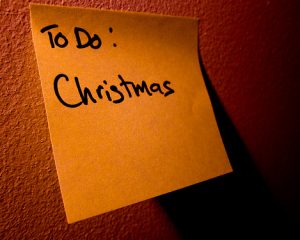
Um, more details please! Cori emailed me on how one little sticky note saved her big time. Here is her story.
So my little post-it note that I carted around with me while living on $22k/year just laid out the details of exactly how much I could spend each day on certain things (not including the rent/bills), just the stuff where you have choices. So if I wanted to get a shirt dry-cleaned, I had to save up a weeks worth of daily dry-cleaning $.I didn’t allow myself to go over budget and I kept all the leftover money in a savings account.
It took a lot of discipline, a lot of bus rides (over cab rides), and a lot of saying “no” to things like mani/pedis/sushi/drinks out, etc. But I managed to make it happen. A little cheesy, but to my 23-year old mind, it worked for me at the time. San Francisco is an expensive place to live, but I was happy living on less there. And you just get creative with your entertainment options.
And with my $5k I saved I took a month off work and went to Costa Rica and took a yoga teacher training course. Thankfully now, I own my own event planning company and no longer have to survive on $22k/year, but the lessons I learned were invaluable.
I had my original post-it stashed in my desk, but one of my kids got off with it. But here’s my best relocation of what it said…
Cori’s Daily Spending
Food: $10
Dry Cleaning: $2
Transportation: $3
Entertainment: $2
Drugstore Stuff(shampoo, makeup): $1
House Stuff (cleaning supplies): $1
Cori, the simplicity of your system and your dedication to it is inspiring!!! Thank you for sharing how you saved money. I hope it helps someone else. Got an interesting success or failure story? Email me at julia@bargainbabe.com and the best will appear on the blog.
This is a post by BargainBabe.com writer Yazmin Cruz.
I have a confession to make. I am addicted to coffee – the pricey frapps and ice blended drinks. But that’s not my only problem. In order to keep up with my caffeine addiction I’ve been charging the drinks on my credit card. Not smart at all, especially when I carry a balance.
I didn’t realize how bad it had gotten until I was reviewing my e-bill and noticed almost half the charges made were at coffee shops. My addiction began about six months ago when I took on more responsibility at work and couldn’t get out of the newsroom until 10 or 11 p.m.
Waking up extra early didn’t help either. By 3 p.m. I needed a pick me up and walked to a local coffee shop for my fix. If I didn’t have cash on me I would simply charge my $4 drinks. In no time my habit added up to $20 a week. Now I pay for my indulgence plus interest.
I shared my dilemma on the Bargain Babe Facebook page and many readers offered solutions that I am implementing. Here’s my plan. First, I’m going cold turkey. I had my last ice blended drink this weekend. I am not frequenting any coffee shops for a while and most importantly I am working hard to pay off my credit card debt. Note to self, don’t use plastic to pay for food or drink!
I am also fighting my expensive coffee addiction one tea bag at a time. Compared to coffee, tea is less expensive and doesn’t add extra calories (unless you add cream). I am using my coffee maker at home more often, as reader Janna suggested:
“I make my own cappuccinos now. I have a Senseo, which I *love* ($.25 per cup). I warm up some milk in the micro, then foam it up with an Aerolatte; simply awesome. For the counter space saved over a home espresso maker and the cost you can’t beat it.”
Having worked at a juice bar, I have enough experience to tackle making coffee at home. I also have an Aerolatte so I just need to commit to doing it myself.
Related posts:
What tempted me to use my credit card this month
I was having lunch (using a coupon, of course) with one of my most frugal friends when she laid a bomb on me: there are only two types of frugal people.
I have always believed there are many types of frugal folks because financial situation, upbringing, and goals vary widely. But when she explained herself, I realized she was right.
Type No. 1 – Frugal by Nature
Type 1 folks are frugal by nature. Spending money causes us pain and we often go without spending even if it would make our lives easier. We will go without, postpone, or delay to save. We will spend extra time researching a product irregardless of how much – or how little – we stand to gain, dollarwise. We will drive extra miles to shave a few bucks off a purchase. The bottom line is that we get an emotional hit from snagging a hot deal and are willing to deny ourselves to score.
Type No. 2. – Frugal by Necessity
Type 2 folks are frugal because we have to be. We recently got laid off, have a partner/spouse who lost a job, or left a job or to raise a family. We want to use coupons and look for sales to save. We are savvy enough to recognize we need to budget and alter our spending behavior, but get hung up because spending money brings us joy, even if we later feel stressed out by our cashflow. We do our best to distinguish between needs and wants. Bottom line is we get an emotional hit from having a new thing, regardless of price.
I know I’m type No. 1 because I am such a firm believer in doing things myself to save money that I often get into ridiculous situations, like the time I made my summer intern create thousands of homemade raffle tickets. Or the time I decided to distribute flyers across Los Angeles via bicycle on a 95-degree day to save gas money. Or the time…
Which type are you?
By Bobbi Burger Brunoehler of BobbisBargains
Should you buy used shoes? My answer used to be a resounding “NO,” but now I answer “maybe.”
When I was little, I was pigeon toed. I had to wear sturdy shoes to correct my stance at a time when sturdy shoes were very OUT. As socially debilitating as the experience was, I learned a thing or two about how shoes affect your feet and how your feet affect the rest of your body.
When you wear someone’s shoes, you are inheriting their improper body alignment and foot problems.
This is because when you are wearing shoes, the weight of your body wears down the heels and bends the fabric to match your pressures. Someone with properly aligned hips and strong ankles would wear out the heels of their shoes in the middle, not to one side or the other.
It used to be that people had one or two pairs of shoes. However, in this day and age of Imelda Marcos shoe shoppers, you can easily find shoes at a yard sale or thrift shop that have never been worn or only worn once or twice. But should you buy them?
Here is how you check if too many miles have been put on the second hand shoes you are considering buying:
- Check the heels for wear. If you see any wear, the shoes have been worn too much to buy.
- Check for wear and tear inside the shoes. Has the size been worn off? Are there indentations in the insoles? Sometimes you won’t see the wear on the heels, but it will show up inside the shoe.
- Is the shoe sitting straight? Are the sides up and down or are they at an angle? Any sag or bulge or deviation from the original shape is a sign that you do not want to inherit the back problems of the previous owner.
If you find a pair of shoes that you just HAVE to have because they perfectly match your new pink taffeta ball gown that you plan to wear to Comic Con, but they have worn heels; don’t despair. Do what your ancestors did. Buy them and take them to a cobbler and have new heels put on them.
Don’t turn your nose up at used shoes. Just make sure to inspect them for wear before purchasing. I got a pair of brand new $200 handmade Brazilian leather shoes for my husband at a Really Free Swap. Score!
By Bobbi Burger Brunoehler of BobbisBargains
Bargainistas know not to pay retail for clothes (except for undergarments.) We all have our favorite thrift shops and know when the new stuff is put out.
But, what to do when you are on vacation? Are you really going to pay $25 for a t-shirt at the seaside resort when you know there is a gently used version for $2.99 at a second-hand shop within blocks?
Let me introduce you to my favorite “don’t leave home without it” web site – The National Thrift Store Directory. No matter where you are in the United States, plug in your zip code and you will find a thrift store near you. Oh be still my beating heart!
I would much rather visit the local thrift shop in some small town than spend time in a tourist trap. Not only can you pick up local souvenirs for a fraction of the cost (mugs that go for $25 at Disneyland are a dollar or two at a thrift store) but you can talk to fellow shoppers and possibly find out about a local event that you would never know was happening (like a pancake breakfast at the community center or a free concert at the high school.)
The National Thrift Store Directory currently has almost 10,000 listings, but you can help other bargain hunters by adding your favorite store.
What is the best item you ever found at a thrift store?
At least one reader was shocked by my disclosure that my monthly budget is $1,200. In a comment about whether a $533 mattress purchase should come out of my budget or my savings, Cindy said, “If you easily have $1200 free cash to spend in a month…wow! That’s not being very frugal.”
Let me explain my budgeting system and why I give myself so much leeway.
I have tried many, many budgeting systems, from tracking every penny to estimating monthly costs by category. None of them worked because they all relied on past purchases to predict future ones. What I spend my money on varies widely. One month a plane ticket may eat up a good chunk of my dollars. During another month a wedding or home project may account for much of my spending.
What does not change is my total spending, certain fixed bills, and my income.
I decided to use this information to create a forward-looking budget (the pdf is safe to download). I start with my income, subtract my fixed bills, and am left with a monthly spending amount (my budget).
My fixed bills include basic necessities and any bills that must be paid including my rent, savings contribution, 1-tank of gas, student loan payment, cell phone bill, and regular prescriptions. Everything else comes out of my monthly budget.
- groceries
- second and third tanks of gas
- gifts
- travel
- clothes
- coffee
- movie rentals
- toiletries
- meals out
- drinks with friends
- hair cuts
- yoga classes
- gardening supplies
- car washes
- vacations
- anything else
Still think $1,200 sounds like a lot?
I gave up credit and debit cards this month to try to reduce my monthly budget. Previously, I went on a spending moratorium to learn new habits. My 15-minute budget may or may not work for you. The first month I used it I reduced my credit card bill by $2,000. Give it a try and let me know what you think.
I’m debating another financial experiment similar to the spending moratorium I undertook last July. This time, I am considering not using any credit cards or debit cards for an entire month, starting April 1. No, this is not a joke.
I got the idea after talking to a friend who had to cancel her credit card because of fraudulent charges. (This was not the same friend that had her credit/debit/ATM card number skimmed.) My friend didn’t have a back up for some reason and was forced to go without a credit card for about a week.
She was astonished at how different it felt to make regular purchases – with cash. At Target she picked out a gift for her grandson’s birthday that came to $61. She balked. $61? In cash? She would not have thought twice about swiping her plastic.
My friend’s experience made me wonder. Is it easier to stay on budget with cash? I pay my bill in full every month so this experiment is not about learning to spend within my means. It’s about spending less.
I rely heavily on my credit card because I spend cash so easily. In fact, I try to limit my ATM usage to one withdrawal of $100 at the beginning of the month. So there is a chance this experiment could go very badly.
The LA Times recently had a story suggesting 10 simple ways to save. I boiled it down to the best tips and added two of my own. Add yours to the mix!
1. Disconnect your land line. Or find a cheaper plan and call your current provider and ask them to match it.
2. Shop around for home and auto insurance policies. Spend an hour once a year checking if you can get a better price on your home and auto insurance. Do them together so you qualify for a bulk discount. Before you go for the absolute lowest price, check the insurer’s complaint ratio, which will indicate how happy their current customers are.
3. Pay cash (only if you really can’t control your credit spending because you are giving up a lot of perks and cash-back rebates).
4. Adjust your withholdings. The LAT says 70 percent of tax payers get a refund – which means we are letting Uncle Sam keep our money for a year, interest free! Instead, you could be earning interest or paying down debt.
5. Pay off high-interest debt. Focus on paying off your credit cards. It’s hard to get ahead when you’re paying 15-30 percent in interest.
6. Pay into your 401 (k). Making a $100 contribution costs you $70 because of the tax benefits, and if your company matches you are making even more for the same $70.
7. Set up an automatic savings deduction. It will force you to stash cash for a rainy day (which, in Los Angeles, is today).
8. Take care of yourself. Preventive health care really does pay off. Some health plans will reduce your premium if you quit smoking and if you reinvest that money on doctor’s bills and cigarette into your 401 (k), you stand to be $250,000 richer at retirement, the LAT story says.
9. Volunteer. Seeing how others live will no doubt making you feel better about what you have in life.
10. Budget! Check out my simple 15-minute budget. It really does work.
11. Exercise. Going for a walk, run, or bike ride is a cheap activity that can energize you and save you trips to the mall$.
I’m taking another luxuriously long weekend to ring in the New Year. Don’t you wish these four-day weekends came around more often?
Next week I’ll be sharing a special download so you can use my 15-minute easy peasy budget to start the year off right. Seriously. Get your finances under control in 15 minutes.
God, I sound like an infomercial. But it’s true!
Also coming up in 2010: expect a week of amazing giveaways to celebrate BargainBabe.com’s one-year anniversary in January. Thanks to all my wonderful readers for helping me come a long way.
See you in 2010!
~ Julia
aka Bargain Babe
Yay! The last day of the Bargain Babe Gift Guide is here. I’m looking forward to getting back to my normal money-savings tips. A bit ironic that I’m closing the gift guide with gifts when you are NOT on a budget. Mostly this is for all of us to ohh and ahh over, then head to Target to budget shop.
A pint-sized computer known as a netbook is a great gift for any one who craves being connected. Prices range from $200-$600 for the top of the line. Not sure how to pick out the right netbook for you? Check out my netbook buying guide.
I’m an iPhone devotee and I make no bones about it. Some say the Android Google phone is gaining steam, but do you really want a phone that croaks “droid!” every time you turn it on? The best feature is that the iPhone is so intuitive there’s no need to read the manual. Plus, new apps make it possible to read books on it so no need to invest in a Kindle. $99-$499. Buy it!
J.Crew’s cashmwere sweaters are renown for their quality and comfort. Expect to pay upwards of $100 or more unless you get one on sale. Also check Nordstrom’s, Bloomingdale’s and Macy’s for sales. Buy it!
A set of fancy olive oil and fig-infused balsamic vinegar is a super versatile gift that works for relatives, distant friends or family, your boss, or even a neighbor. The two tall Italian glass bottles come tucked into a sturdy cardboard box with packaging that oozes luxury. Two 200ml bottles are $40 from Global Gardens in Santa Barbara. Buy it!
I was putting up flyers for the Frugal Fe$tival last weekend when I noticed two thrift stores on Sherman Way just west of Owensmouth in Canoga Park had gone out of business. To my shock Out of the Closest was a discount a furniture store and Aaardvarks Odd Ark was dark.
If anything, in a recession thrift stores should be thriving! Are people not even buying used clothes? My goodness.
I looked online to see how thrift stores across the country are faring. Perhaps the two I saw closed were a fluke. I found these headlines:
Billerica consignment stores hit hard by recession (MA, 7/20/09)
Salvation Army store to close (Mt. Vernon, VA) (7/17/09)
Economy closing Noble Road thrift store (Cleveland, OH 7/9/09)
Helping Hands thrift store closes its doors (Wetaskiwin, Canada 7/7/09)
St. Vincent de Paul closing its doors – seeking small headquarters (Sault Ste Marie, MI 6/26/09)
Thrift shops expect increase due to closing of Salvation Army (Norwich, CT 6/25/09)
And that is just going back one month!
I wonder what the National Association of Resale and Thrift Shops has to say about this. An April press release begins, “The resale industry is one of the few recession proof segments of retailing…”
Not anymore. The recession has gone on long enough that the wave of consumers who turned to thrift stores to cut their budget a year ago has washed out.